Let’s Clear Up the Biggest Myth First
Somewhere along the way, a rumor started. “Textile is easy money in India. Buy some fabric, sell it for more, done.”
If that were true, every second person in the country would already be rich from it. India has one of the oldest and biggest textile industries in the world. Cotton, silk, handloom, export units, your neighborhood tailor, that huge wholesale market in Surat you’ve probably heard of, all of this is textile. And yet, most people who jump in without a real plan don’t last three years.
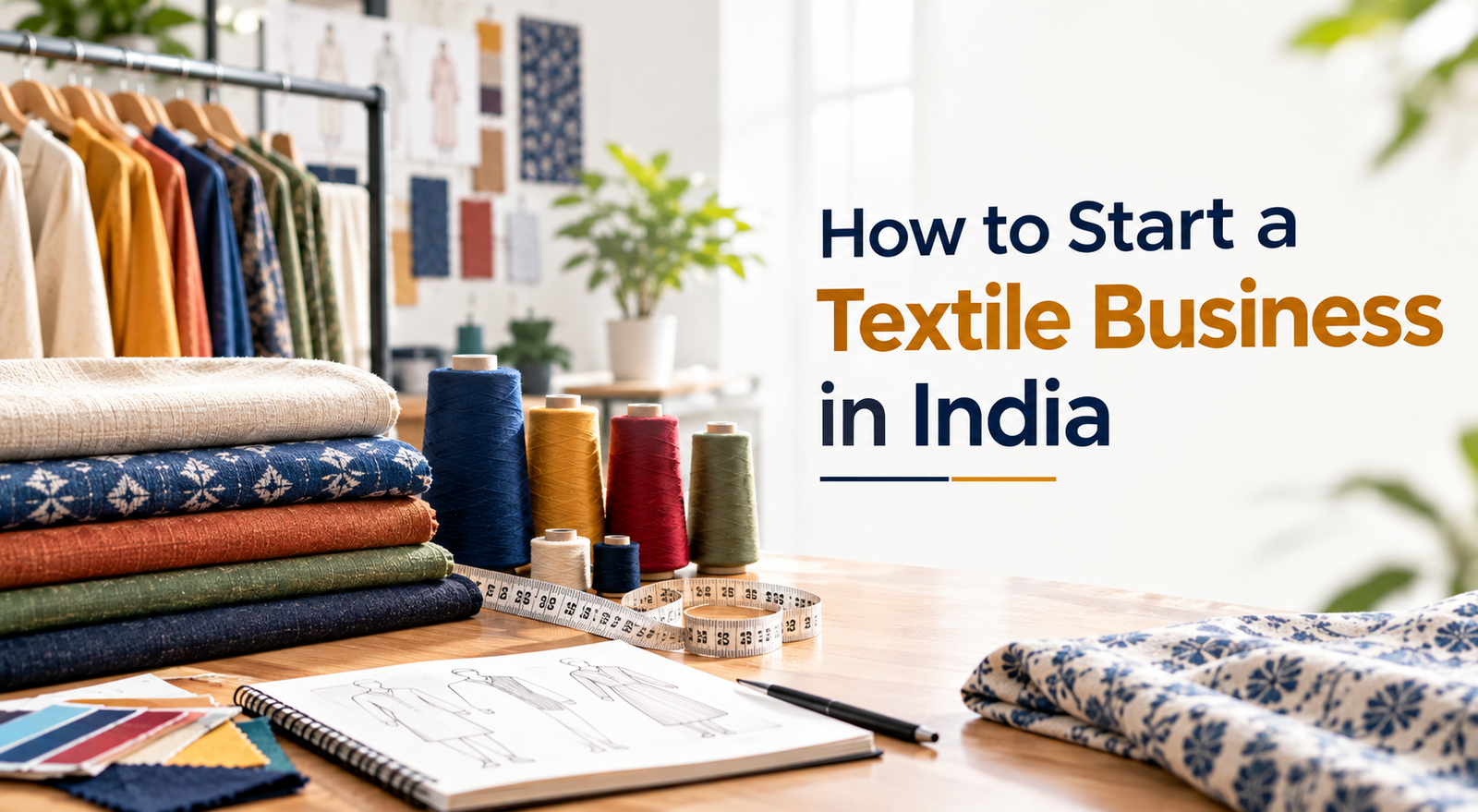
That’s not meant to scare you. It’s meant to help you. Once you understand how this industry actually works, starting a textile business becomes a lot less confusing, and a lot more doable. Let’s go through it properly. The realistic way, not the “get rich in six months” version from YouTube.
Step One: Pick Your Lane First
Here’s something a lot of beginners get wrong. They say “I want to start a textile business” like it’s one single thing. It isn’t. Textile is actually a whole group of different businesses, and each one needs a different setup.
- Manufacturing : You make the fabric or the garment yourself. This needs machines, space, and trained workers. The highest cost to start, but also the most control over quality and price.
- Trading or wholesale : You buy finished fabric or clothes in bulk and sell them to shops or other businesses. Lower cost to start, faster to begin, but smaller profit on each sale.
- Retail : You sell directly to the final customer, either through a shop or online. More direct contact with customers, and you can start genuinely small.
- Export : You sell Indian textile products to buyers in other countries. Bigger opportunity, but more paperwork, more waiting, and more risk if a shipment or payment goes wrong.
- Handloom and craft-based : Think block print, hand embroidery, traditional weaves. Usually smaller in scale, but a real advantage if you can tell a good story about your product. Especially useful in a city like Jaipur, which already has real craft history behind it.
Pick one of these to start. You can always add more later. Trying to do all five at once is usually how beginners run out of money and energy within a year.
Step Two: Be Honest About the Money
Let’s talk real numbers, because advice like “it depends on your scale” doesn’t actually help anyone.
A small trading or retail textile business can usually start with somewhere between ₹2 lakh and ₹10 lakh. Most of that goes into your first stock, a basic setup, and enough money to survive the first few slow months. A small manufacturing unit, even a modest one with a few machines, usually needs anywhere from ₹10 lakh to ₹50 lakh or more, depending on the machines involved (Shriram Finance, 2026). Export businesses often need less money for machines, but more working capital, since you’re often paid weeks or months after you’ve already shipped the goods.
Whatever number you land on, add at least 20% more on top in your head. Something will always cost more than you planned. It just does.
Step Three: Get the Paperwork Done Early
This is the part most people put off, and that’s exactly why it causes problems later. Do this early, not after you’ve already started selling.
- Choose your business type : A simple proprietorship works fine if you’re starting small and alone. A partnership, LLP, or private limited company makes more sense once you have a partner or plan to grow fast.
- Register for GST : This becomes compulsory once your yearly turnover crosses ₹40 lakh, but many businesses register earlier anyway, since a lot of buyers won’t work with someone who can’t give a proper GST bill (LegalWiz, 2026).
- Do your Udyam (MSME) registration : It’s free, fully online, and takes under an hour. It also makes loans easier to get, and gives you some protection if a buyer delays payment (LegalSuvidha, 2026).
- If you’re manufacturing, get a Factory License, along with any pollution clearance your state asks for, especially if dyeing or printing is part of your work.
- If you’re exporting, apply for an Import Export Code (IEC). Without this, you simply cannot legally export anything.
None of this feels exciting. All of it matters. A business built on shaky paperwork tends to hit a wall right when it’s finally starting to grow, which is the worst possible time for that to happen.
Step Four: Know Where Your Raw Material Comes From
A lot of first-time textile owners skip this step completely, and then wonder why their costs keep going up every few months.
India has a few genuinely huge hubs worth knowing, even if you’re far away from them. Surat is one of the biggest fabric trading markets in the country, especially for synthetic fabric. Tiruppur is known as the country’s knitwear and t-shirt capital. Ludhiana is famous for woolens and hosiery. Panipat has built a whole business around recycled and home textiles.
You don’t need to visit all of these in person, though an early visit genuinely helps you understand pricing and quality better than any phone call ever will. What you do need is at least two or three reliable suppliers for your main raw material. That way, you’re never stuck completely if one of them lets you down, suddenly raises prices, or simply stops answering your calls, which happens more often in this industry than people expect.
Step Five: Know the Mistakes Before You Make Them
I’ve seen the same few mistakes play out again and again with new textile business owners. It’s almost like a pattern on repeat.
New owners often buy too much stock at once, tempted by what feels like a great bulk deal, only to realise months later that trends and seasonal demand moved faster than their stock did. Many also underestimate how much working capital they actually need, especially with buyers who pay 30, 60, or even 90 days late, which is sadly common in this industry. A lot of first-timers also copy whatever’s already popular, instead of finding even one small thing that makes their product different, and then wonder later why they’re stuck competing purely on price against people with deeper pockets.
None of these mistakes are fatal on their own. But all three together, which happens more often than you’d think, is usually enough to sink a business within its first two years.
Step Six: Use the Government Schemes Available to You
A lot of small textile business owners either don’t know these exist, or assume they’re “only for big companies.” Often, that’s simply not true.
The PM MITRA scheme is building large, shared textile parks across the country, aimed at giving smaller manufacturers access to infrastructure they could never afford to build alone (Vision IAS, 2026). The PLI scheme for textiles offers real financial support to manufacturers working in certain fabric categories. And many state governments have their own textile policies, which often include subsidies on power, land, or machines specifically for smaller units.
Even if some of these don’t apply directly to your business today, it’s worth checking every year or two. New schemes do appear, and the ones that already exist aren’t always easy to find out about unless you’re actually looking.
Step Seven: Find Your First Real Customers
Here’s something that surprises a lot of new business owners. Your first customers almost never come from one big marketing push. They usually come from somewhere much smaller and more personal.
Local retailers and shop owners are often your fastest first customers if you’re manufacturing or doing wholesale, since they need reliable suppliers more urgently than you need customers. If you’re selling directly to people, a simple, honest presence on Instagram or WhatsApp, showing your real product and your real process, builds more trust early on than any paid ad usually does. And honestly, word of mouth still runs unusually strong in this industry. One happy shop owner or customer talking about you to three others is often worth more than a month of ad spending.
Start small, deliver properly, and let your reputation do a lot of the work for you early on.
So, When Does This Actually Start Making Money?
This is probably the question already sitting in your head, even if you haven’t said it out loud.
It genuinely depends on which lane you picked in step one. A small trading or retail setup, if you’ve chosen your product and pricing sensibly, can sometimes break even within six to twelve months, mainly because the starting cost is lower. A manufacturing unit usually takes longer, often one to two years, simply because there’s more upfront cost to recover before real profit starts showing. Export businesses are often the slowest to show profit, not because the margins are bad, but because the whole process, from finding a buyer to actually getting paid, tends to take much longer than people expect going in.
The honest, slightly unglamorous truth is that very few textile businesses make real profit in their first few months, no matter what a confident social media post might suggest. The ones that survive long enough to get there are almost always the ones that planned their money properly from day one, instead of assuming sales alone would carry them through the slow early months.
A Quick Word for Jaipur-Based Entrepreneurs
If you’re starting this journey in Jaipur specifically, you’re sitting on something genuinely valuable that a lot of other cities simply don’t have. Block print, Sanganeri prints, and traditional handloom work carry real heritage and real story value, something today’s customers, especially outside India, are actively searching for and willing to pay more for. Don’t treat your local craft as old-fashioned. Treat it as your real advantage over businesses starting from scratch somewhere else.
The Real Takeaway
Starting a textile business in India isn’t simple, and honestly, anyone who tells you otherwise is probably trying to sell you something. But it’s absolutely doable, with a real plan, honest numbers, and the patience to get the boring paperwork right before you start chasing big sales.
The businesses that actually last in this industry usually aren’t the flashiest ones at the start. They’re the ones that got the basics right early, stayed realistic about money and time, and kept showing up steadily while everyone else chased shortcuts.
If you’re seriously thinking about starting a textile business, or you’ve already started and feel stuck on what comes next, I’m Rahuul Kumar Jain, a business consultant in Jaipur working as a business growth strategist with founders across different industries, including textile and craft businesses specifically. If you’re looking for honest, practical guidance instead of generic advice copied from the internet, I’d genuinely be glad to help you think this through properly.
Because the gap between “I want to start a textile business” and “I actually run a profitable one” usually isn’t talent or luck. It’s simply having the right plan, and someone experienced enough to help you avoid the mistakes that quietly sink most people in their first two years.