Introduction
Ask most business owners what a good month looks like, and they’ll talk about sales. Revenue up, orders coming in, customers buying — that feels like success. And in the moment, it genuinely does feel that way.
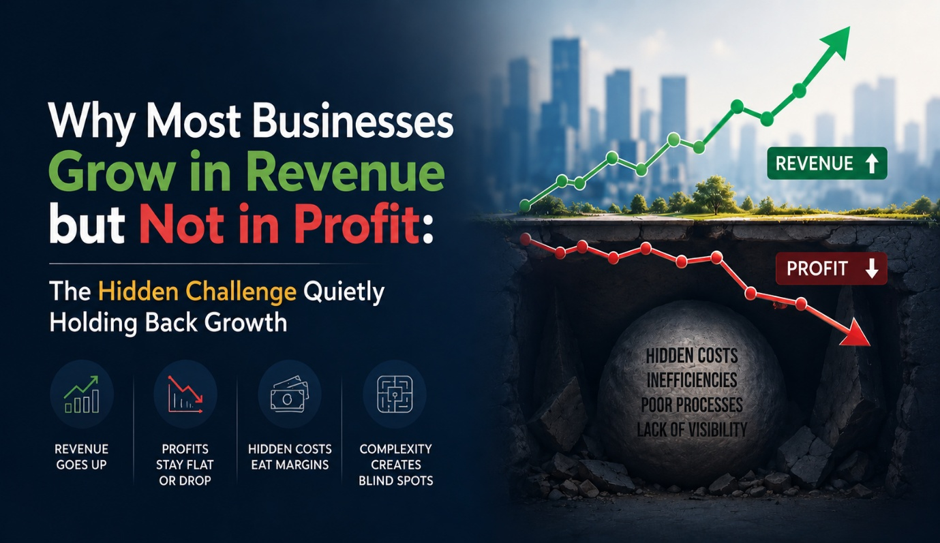
But here’s what nobody warns you about early enough: you can have a record-breaking sales month and still struggle to pay your bills. The orders were real. The stress that followed was also real. And the gap between those two realities is where most businesses quietly get into trouble.
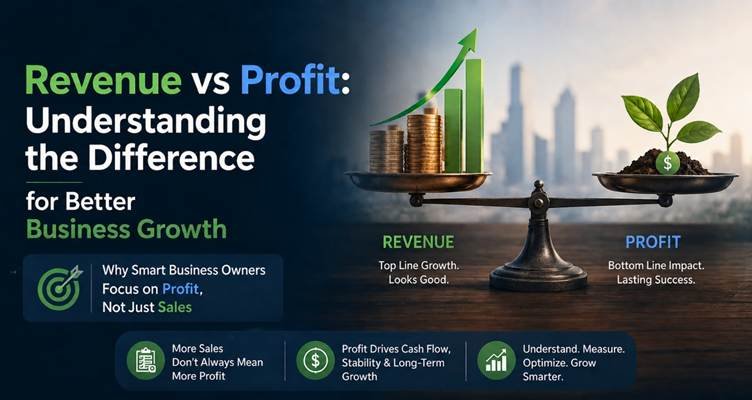
Revenue is what your business collects. Profit is what your business keeps. Those two numbers can live very far apart — and confusing them is one of the most expensive mistakes an owner can make. This blog breaks down exactly what separates them, why it matters, and what businesses that get this right actually do differently.
Understanding the Topic
What Is Revenue?
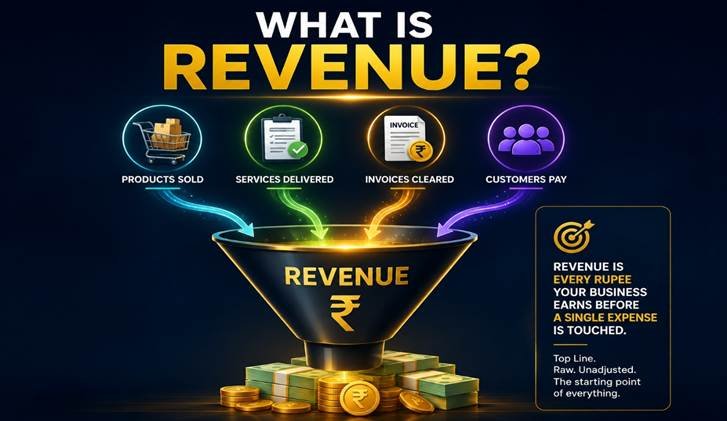
Revenue is every rupee your business earns from sales before a single expense is touched. Every product sold, every service delivered, every invoice cleared — it all lands here first. Nothing subtracted yet. Nothing accounted for. Just the raw, top-line number.
A business that sells ₹10 lakh worth of products in a month has ₹10 lakh in revenue. What it cost them to make those sales? That story hasn’t started yet.
What Is Profit?
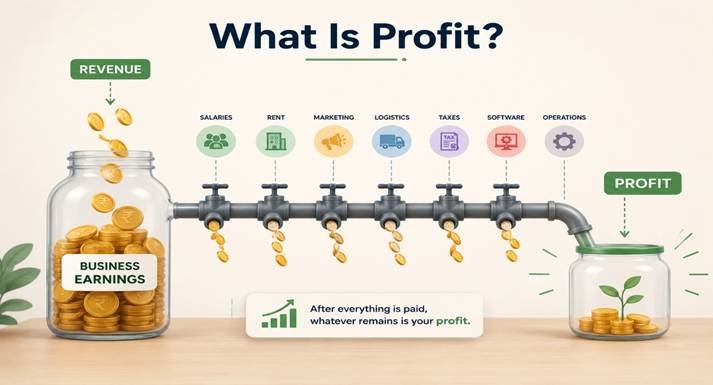
Profit is what’s left after everything else has been paid. Salaries, rent, marketing, logistics, taxes, software, operations — once all of that is settled, whatever remains is your profit. It’s called the “bottom line” because it sits at the end of everything, after the full weight of running the business has been applied.
Same business, same ₹10 lakh in revenue. But if ₹8 lakh went back out the door to keep things running, the real result of that month is ₹2 lakh. That number — not the ₹10 lakh — is the honest answer to whether the month actually worked.
Revenue vs Profit at a Glance
| Revenue | Profit |
| Total sales generated | Earnings after expenses |
| Measures sales performance | Measures financial health |
| Top-line metric | Bottom-line metric |
| Does not account for costs | Includes all business costs |
Signs You’re Facing This Problem
The tricky part about prioritizing revenue over profit is that it rarely feels like a mistake while you’re doing it. Growth feels like growth — until these patterns start showing up consistently.
Sales are growing but cash flow stays tight. More orders than ever, but the end of the month still feels uncomfortably close. Something doesn’t add up — because it genuinely doesn’t.
Revenue climbs every year but financial stability doesn’t improve. The top line looks good. But the business isn’t building reserves, isn’t investing with confidence, and the returns don’t feel proportionate to the work going in.
Discounting has become the default. Discounts close deals — and silently erode margins at the same time. A business built on constant discounting is slowly discounting its own future.
Expansion creates pressure instead of relief. The new hire, the new location, the bigger inventory — each one seemed like growth. But costs arrived faster than profits, and now the pressure is heavier than before.
Why This Happens
Focusing on Sales Instead of Margins
Revenue targets are exciting to chase and easy to celebrate. Profit margin goals ask harder, more uncomfortable questions — and those questions have a way of getting pushed down the agenda until something goes noticeably wrong.
Rising Operating Costs
Growth brings expenses along for the ride. More staff, more tools, more complexity — each cost feels justified in isolation. Together, they quietly close the gap between what comes in and what stays. Businesses that don’t track this drift rarely notice until the margin has already shrunk to something uncomfortable.
Ineffective Pricing Strategies
More businesses underprice than owners would ever admit — not out of carelessness, but out of a genuine fear of losing the customer. According to the Harvard Business Review, pricing decisions carry more weight on long-term profitability than almost any other single choice a business makes. Yet pricing gets reviewed least often.
Lack of Financial Analysis
When profit margins only get reviewed at year-end, problems have twelve months to deepen before anyone notices. What could have been a small, early correction quietly becomes something that takes real effort to reverse.
Challenges Created by the Problem
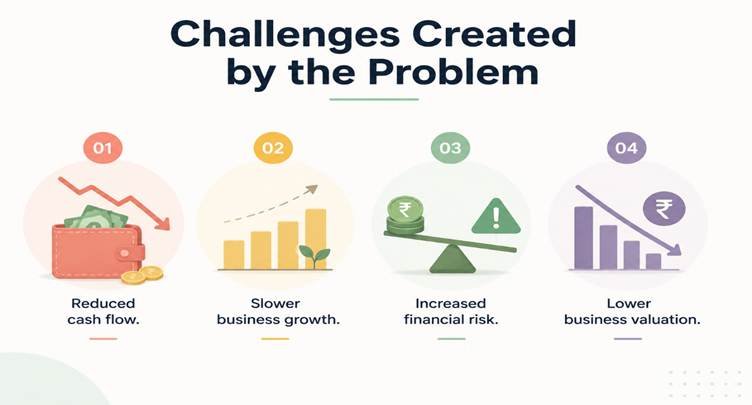
Reduced cash flow. A business can look completely healthy on a revenue report while the owner is quietly stressed about routine expenses. Low profit margins leave no buffer — and without a buffer, even a normal month can feel precarious.
Slower business growth. Real growth — better talent, new markets, stronger systems — requires profit to fund it. When margins are thin, the business keeps running but never truly accelerates.
Increased financial risk. One unexpected expense, one slow quarter, one market shift — and a business with thin margins that looked stable is suddenly in a genuinely difficult position.
Lower business valuation. Investors and lenders look past revenue quickly. Profitability is where they look to understand whether the business creates real value — or simply moves money around.
Solutions and Action Steps
Monitor profit margins monthly. Gross profit, operating profit, net profit — tracking these every month is what separates businesses that catch problems early from those that discover them too late.
Review your pricing honestly. Did you price based on what your product is worth — or based on what you thought people would accept without pushing back? Even a small, well-reasoned price adjustment can shift profitability in ways that feel almost disproportionate to how simple the change was.
Reduce unnecessary expenses. Every business carries costs that have outlived their purpose. A regular audit almost always finds something — a subscription nobody uses, a process costing far more than it should, a spend category that grew while nobody was watching.
Improve operational efficiency. Every manual task done by hand is a cost the business is choosing to carry. Businesses that invest in automation and streamlined workflows don’t just save time — they build margin into how they operate.
Focus on high-profit revenue streams. Not all revenue deserves equal attention. Some products and clients genuinely drive the business. Others generate activity with very little return. Knowing the difference — and directing resources accordingly — is one of the highest-leverage moves any owner can make.
Use financial KPIs for decisions. Profit margin, customer acquisition cost, return on investment — these shouldn’t only surface when something feels wrong. They should be part of the regular rhythm of how you run and review the business.
How India’s Leading Business Consultant Rahuul Kumar Jain Can Help You
Knowing that profit matters more than revenue is the easy part. Understanding exactly what’s holding your specific business back — that’s where most owners get stuck, and where the real work begins.
Rahuul Kumar Jain works closely with entrepreneurs, startups, and growing businesses to find the real gaps in financial performance and build strategies that create growth solid enough to stand on.
Here is exactly what working with him looks like:
- Profitability Improvement — He goes beyond surface-level numbers to find where your business is genuinely losing margin, and builds a clear plan to recover it.
- Margin Optimization — Not all revenue is created equal. Rahul identifies which parts of your business are actually worth growing — and which ones are quietly dragging performance down.
- Cost Reduction — Every business carries expenses that have outlived their value. He brings a disciplined, outside perspective to find what can be cut without touching what matters.
- Operational Efficiency — Slow processes, manual workflows, and disconnected systems all carry a hidden cost. Rahul helps streamline operations so the business runs leaner and performs stronger.
- Financial Performance Analysis — Clear, honest visibility into where your money is going, what your margins actually look like, and what the numbers are really telling you.
- Sustainable Scaling — Growth that costs more than it returns isn’t growth. Rahul builds scaling strategies that expand the business without eroding the profitability that makes expansion worth it.
Because the goal was never just a better-looking revenue number. It was always a business that generates real returns — and gives its owner the clarity and stability to keep building with confidence.
Conclusion
Revenue tells you how much came in. Profit tells you how much was actually earned.
Businesses that chase revenue without watching profit tend to grow in volume while quietly shrinking in health. The ones that build around profitability create something more durable — steadier cash flow, smarter decisions, and a foundation solid enough to support real, lasting growth.
This isn’t just a financial distinction. It’s a shift in how you think about what business success actually means — and once that shift happens, almost everything else follows.
Call To Action
Is your business generating more revenue but not seeing the profit you expected?
Connect with Rahuul Kumar Jain to identify hidden profit leaks, optimize business performance, and build a growth strategy that delivers both stronger revenue and real profitability.
Start building a more profitable and sustainable business today.