The Rules of Growth Have Changed
A few years ago, growing a business was simpler. Spend more, market louder, open more channels — and the results followed.
That doesn’t work anymore. Not for most businesses.
Some owners noticed this early. They saw their returns shrinking even as their effort kept increasing. The market didn’t announce this change. It just happened. Customers got harder to impress. Noise got louder everywhere. Real attention became one of the hardest things to earn.
The businesses growing steadily today aren’t the biggest or the loudest. They’re the most honest — about where they stand, what their customers actually need, and what they can realistically deliver.
A growth roadmap in 2026 isn’t a vision board with deadlines attached to it. It’s a clear, realistic plan. One that connects where your business really is today to where it can genuinely go next.
When You’re Busy, But Not Actually Growing
Growth without direction is risky. It feels fine — right up until it doesn’t.
Here are the signs to watch for:
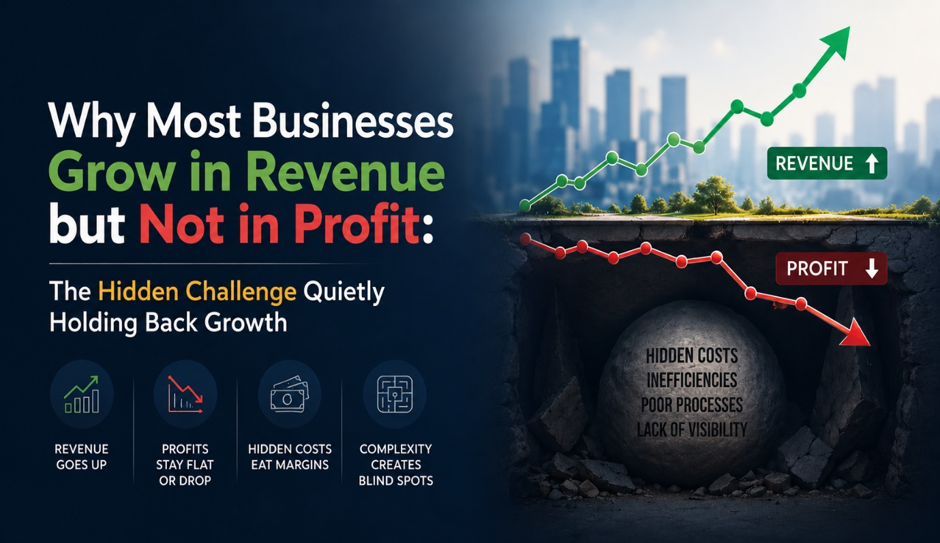
- Revenue is going up, but profit margins are quietly shrinking. You’re growing in size, not in value.
- Every opportunity feels urgent. Your team ends up stretched across too many things at once.
- Different departments are chasing different goals, with no shared idea of what the business is actually building toward.
- Planning conversations keep circling back to the same unresolved questions — priorities, capacity, what to focus on.
- Growth feels reactive. You’re responding to whatever the market throws at you, instead of directing it yourself.
- The team is working harder than ever, but the business doesn’t feel like it’s actually compounding.
If any of this sounds familiar, your business is moving. But it isn’t navigating.
Why Most Growth Plans Fall Apart
Most growth plans don’t fail because of bad intentions. They fail because of a few common mistakes.
Many plans are built on ambition, not evidence. Targets get set based on what leaders want, not what the business can actually support. Ambition without grounding isn’t a strategy — it’s just optimism with a deadline attached.
A lot of plans also try to do everything at once, instead of picking one clear growth engine and mastering it first. When you spread focus too thin, nothing gets strong enough to actually compound.
Every business has one bottleneck holding it back more than anything else. Plans that ignore this bottleneck just add more pressure to a system that’s already stretched.
Sometimes, what looks like a roadmap is really just a long list of activities. Without clear order and priority, a list like that creates noise, not direction.
Many roadmaps are also written once a year and then forgotten for the other eleven months. And plans that only live in a leader’s head never actually reach the people doing the real work.
What It Costs to Have No Roadmap at All
Not having a roadmap isn’t a neutral choice. It has a real cost.
Every month without clear direction is a month of missed opportunity — customers you didn’t reach, partnerships you didn’t build, skills you didn’t develop.
Businesses without a roadmap tend to keep investing in what’s familiar, instead of what’s actually needed. They react to whatever feels loudest in the moment, instead of what actually matters most. And often, by the time they notice the gap between where they are and where they need to be, that gap has already grown quietly wider.
A business without a roadmap doesn’t slow down gradually. It just keeps circling the same spot.
The Steps That Actually Make a Roadmap Work
Here’s what building a real, usable roadmap looks like:
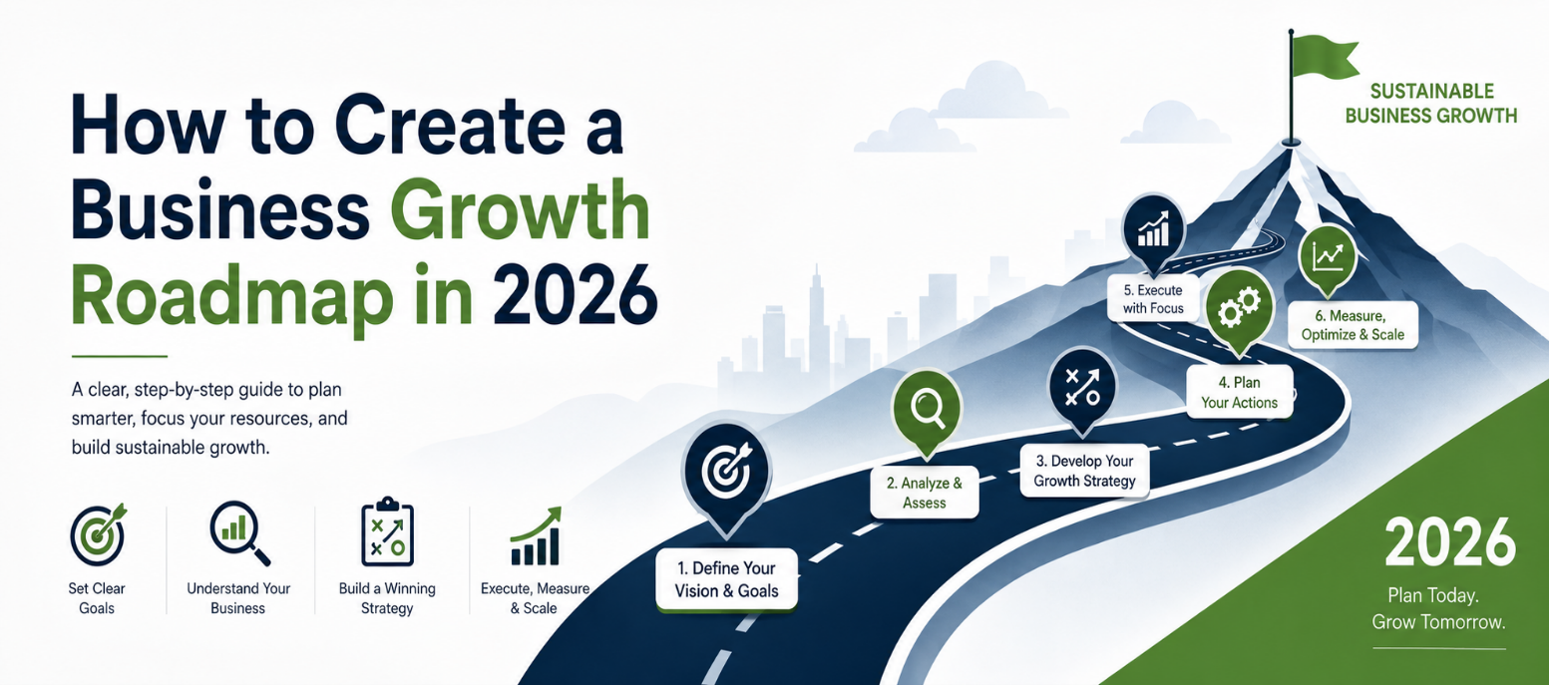
- Start with an honest audit. Look at your revenue quality, customer retention, team capacity, market position, and the one constraint that’s limiting everything else right now.
- Define growth clearly. Don’t just set a revenue number. Decide what kind of growth you want, through which customers, using which strengths, and at what pace you can actually sustain.
- Pick your main growth engine. Focus on mastering it before adding other channels. Doing one thing well beats doing five things halfway.
- Sequence your priorities. Decide what has to happen first to make everything else possible. Protect that from being pushed aside by things that feel urgent but matter less.
- Set quarterly milestones. Make them specific enough to measure, and honest enough to show you early if something isn’t working.
- Make the plan visible across the team. Every person should understand how their work connects to the bigger goal. That’s what turns a plan into real movement.
- Review it every month. Treat this with the same seriousness as your financial reports. Update it as the market shifts and as you learn what’s actually working.
Why Rahuul Kumar Jain?
Rahuul works with business leaders who want growth that’s deliberate and sustainable — not just busy.
As a Business Growth Strategist and Strategic Business Advisor with over 20 years of experience, here’s what that support usually looks like:
- Growth Diagnostic — An honest look at where the business stands today, and what’s really limiting its next stage of growth.
- Roadmap Architecture — A clear, prioritised growth plan, built around your actual market, team, margins, and capacity to execute right now.
- Growth Engine Identification — Finding the one thing your business is best positioned to grow through, and building focus around it.
- Quarterly Execution Frameworks — Breaking the roadmap into 90-day cycles, with clear ownership and honest reviews, so the plan stays alive all year.
- Constraint Removal — Finding the single biggest bottleneck holding growth back, and building a direct plan to fix it.
- Team Alignment Sessions — Making sure the strategy is understood and owned at every level of the business, not just at the top.
Built Around Your Business, Not a Template
Every roadmap starts from scratch, built around your specific business.
The starting point is always what’s actually true — not what you’re hoping is true. And every recommendation is planned around what your business can realistically do, given its current team, culture, and position in the market.
The goal isn’t to create an impressive-looking document. It’s to build a plan you’ll actually use — one that gets sharper and more useful every quarter you work with it honestly.
The Question Every Business Owner Ask Themselves
Most businesses don’t fail because they lacked ambition. They fall short because that ambition never turned into a clear, sequenced, realistic plan for getting from here to there.
A roadmap doesn’t guarantee success. But trying to grow without one, in a market as competitive as 2026, makes real, lasting growth much harder to achieve.
The businesses pulling ahead right now aren’t doing more than everyone else. They’re doing the right things, in the right order, with a clarity most of their competitors haven’t found yet.
Connect with Rahuul Kumar Jain, one of the best business consultants in India, to build a growth roadmap that reflects where your business genuinely stands — and maps a clear, honest path to where it’s capable of going.